
How To Set Up Your Small Business Presence Online


Small, local, brick and mortar, obscure … whatever your business is, shoppers expect to find it online!
In fact, 58% of consumers say they check a business website to confirm information they’ve seen on social media, Google, or AI tools.
Your digital presence accounts for the majority of your first impressions, making it essential for shaping trust, building credibility, and driving sales.
Ready to set up a crackin’ digital footprint?
Here’s how to craft an online presence for your business that welcomes in and wins over hundreds of new customers.
Why a Great Online Presence Is Critical
Today’s customers don’t discover businesses the way they used to.
Before they visit a store, book a service, or make a purchase, they’re online.
A strong online presence helps you reach more potential customers, stay visible when people are searching for what you offer, and build credibility from the very first interaction.
Capture Modern Consumers
Before people ever walk into a store or pick up the phone, they’re digging around online.
Modern consumers rely heavily on digital channels to research products and services before making a decision.
This means your online presence is the primary way customers find you and decide whether to trust you. If your business doesn’t show up in search results, social media, or on Google Maps, you’re invisible to a huge segment of your market.
Increased Visibility and Reach
An online presence dramatically expands your reach beyond your personal network or local geography.
When someone searches for the products or services you offer, your website and profiles are your way of showing up in those searches. This visibility translates to more website visits, more inquiries, and ultimately, more customers.
Even if a customer doesn’t buy from you immediately, a strong online presence keeps you top of mind. When they’re ready to make a purchase, they’ll find you.
Enhanced Credibility
Consumers are increasingly skeptical of businesses without an online footprint. A business that lacks a website, has outdated information, or is inactive on social media can appear unprofessional or unreliable — even if the product or service is excellent.
Over half (58%) of shoppers go looking for a business website to confirm information about a brand that they’ve seen elsewhere online (such as on Google or social media).
By contrast, a business that shows up well online, provides clear information, and engages with customers builds confidence. Reviews, testimonials, consistent branding, and up‑to‑date content all contribute to a credible digital reputation.
How To Make Your Brand Stand Out Online
These actionable steps will help you create a cohesive online presence that connects with your ideal customers.
Clarify Your Audience and Voice
Before you build a website or start posting on social media, take time to define your target audience. This will ensure the brand you’re setting up will connect with the folks whom you want to serve.
Define Your Ideal Customer
Get specific about your audience. Go beyond basic demographics and focus on what really matters.
What problems are they trying to solve? What are their goals, frustrations, and motivations? What would make them choose one business over another?
The clearer you are on your ideal customer, the easier it becomes to create messaging that feels relevant.
Identify What Sets You Apart
Next, what makes your business stand out to them?
Your unique value proposition could come from your process, expertise, pricing, or the results you deliver.
The distinction should be simple and clear. If a potential customer can’t quickly understand why you’re the better choice, they’re likely to move on.
It’s a crowded market, don’t take that chance.
Establish Your Brand Voice and Visuals
Now, decide how your brand should sound and look.
Choose a tone that reflects your business. Do you want to be perceived as professional, conversational, bold, or educational?
Then define your visual identity, including colors, fonts, and imagery. These elements should remain consistent across your website, social media, emails, and on and on.
Why This Step Matters
When you clarify your audience and brand upfront, everything else becomes easier. Your website copy is more focused and easier to create. Your messaging naturally builds trust.
Instead of guessing what to say or how to present your business every single time, you’re working from a clear strategy that makes your brand look polished and professional from day one.
Build a Professional Website
In a nationwide study, the DreamHost team found that a whopping 69% of consumers believe a website is critical in establishing credibility when it comes to local businesses.
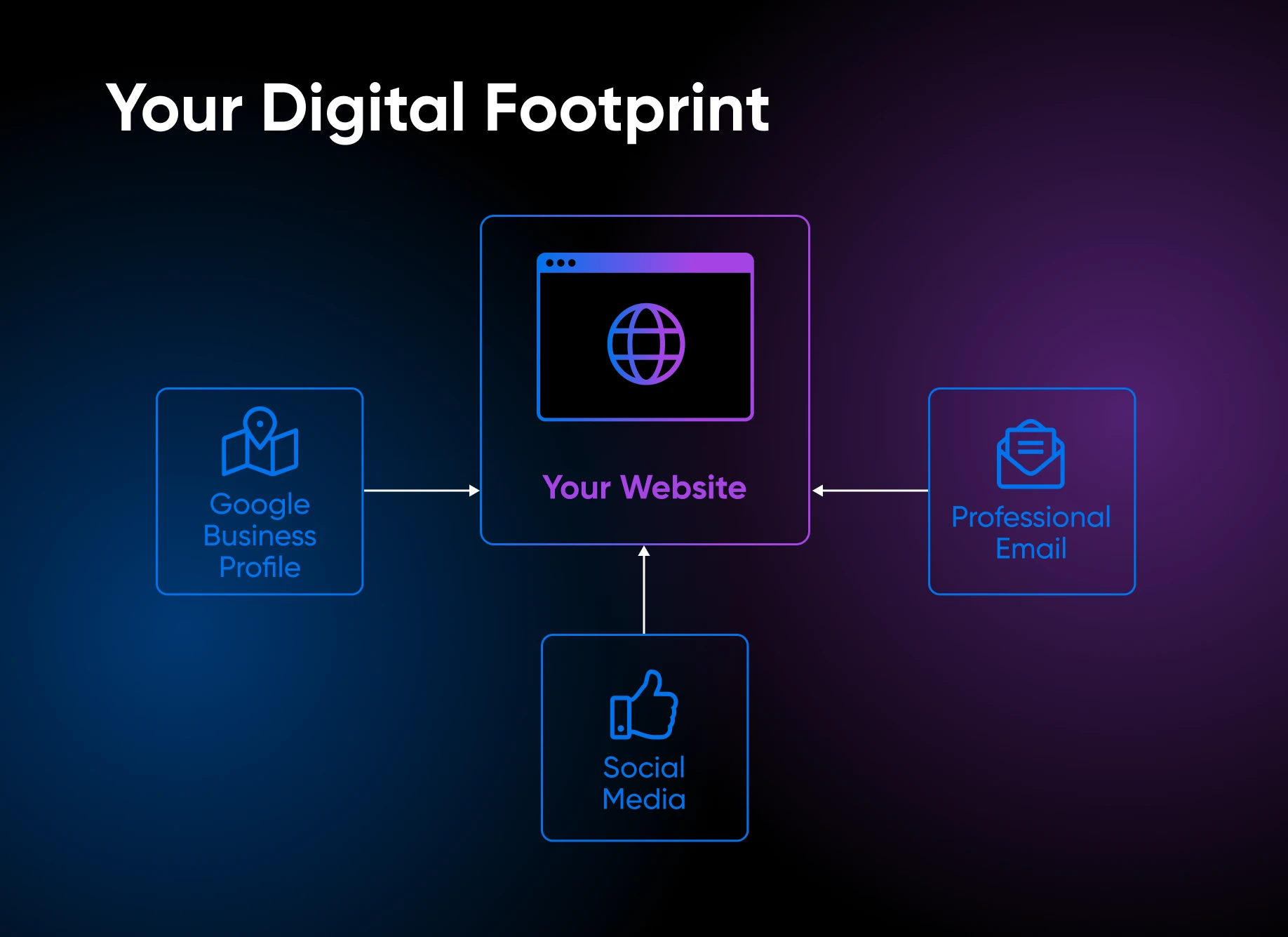
Your website is your central hub; it’s where everything connects — your marketing, your brand, and your sales.
Choose a Domain Name
Start with your domain name.
Keep it short, memorable, and easy to spell. Avoid complicated words or unnecessary characters. A simple domain makes it easier for customers to find and remember your business.
Got a few ideas? See if the one you love is available (and register it before it’s gone!), using our domain name research tool.
Pick the Right Platform
Once your domain is ready, it’s time to start building your site.
Look for platforms that prioritize speed, security, and mobile responsiveness so your site performs well on any device.
WordPress is a top choice: it powers over 40% of all websites, offering extensive support, powerful features, and active communities.
Essential Pages and Calls to Action (CTAs)
In our opinion, every business website should include a few core pages.
- Make sure your home page clearly explains what you do.
- Add an About page to build trust.
- Build a Services/Products page to outline your offerings.
- Include a Contact page so folks can easily reach you.
- Create a blog or resource section to share the content that’s going to be the base of your marketing efforts.
In addition, a website should guide visitors to act. That’s the role of CTAs — prompts that tell users what to do next. Think booking a call, making a purchase, or signing up for an email newsletter.
- Make your primary CTA clear and consistent.
- Use the same wording across your site and place it prominently on your home page, navigation, and key sections.
- Offer secondary CTAs for visitors who aren’t ready to buy; options like downloading a guide, joining a newsletter, or following on social media still capture leads and keep prospects engaged.
- Make CTAs specific and action-oriented; avoid vague phrases like “Learn More.” Instead, use language that emphasizes the benefit, such as “Get Your Free Estimate” or “Start Your Project Today.”
Don’t Forget the Social Proof!
Social proof shows that real people trust and get results from your business; through reviews, testimonials, and case studies.
Its job is simple: reduce doubt and build instant credibility.
Our research found that online reviews are the most important factor impacting shopper trust: a whopping 74% marked this option as a priority for website credibility!
Buyers rely heavily on others’ experiences before making decisions. Strong, specific proof increases trust and conversions, making it a major advantage for small businesses.
Begin with your happiest customers and capture feedback right after a positive outcome. Look for emotional, specific responses in emails or social media, and make it easy for customers to share details about their results.
Show real names, faces, and measurable outcomes whenever possible. Place testimonials near key CTAs to inspire action at the moment it matters most.
Optimize for Search
Search engine optimization (SEO) is critical in helping people find your website on the internet.
This is actually a pretty deep topic, so right now we’ll sum it up by saying SEO for small businesses is all about helpful content, solid technical foundations, and a fast, user-friendly website.
These tips will help you get to that place:
- Create valuable, keyword-driven content that answers what your audience is actually searching for.
- Optimize your site structure and on-page elements like titles, meta descriptions, and internal links so search engines can easily understand and rank your pages.
- Prioritize site speed and mobile performance, since slow or non-mobile-friendly sites hurt both rankings and user experience.
- Keep content fresh and consistent with regular updates and new posts to stay relevant in search results.
Set Up Your Google Business Profile
A Google Business Profile (GBP) puts your business on the map…literally.
A complete Google Business Profile increases your visibility in local searches, helps people find your business on Google Maps, and even surfaces in voice search queries.
For local businesses, a well-maintained profile can be one of the most effective tools to attract new customers and build credibility.
Claim Your Profile
Claim your profile at business.google.com/.
Here, Google will walk you through verifying your business. Verification can take a few days and may involve a phone call, email, or postcard sent to your business address. Once verified, you officially control the information displayed about your business.
Complete Every Detail
A complete profile builds trust and improves your visibility. Fill in every field Google asks for, including:
- Business hours
- Phone number
- Website URL
- Business description detailing your services
The more information you provide, the more likely Google is to show your business to relevant local searchers.
Add Photos of Your Business
Upload photos of your team, workspace, products, or services.
High-quality images help your profile stand out and give potential customers a sense of your personality and professionalism.
Collect and Respond to Reviews
Encourage satisfied clients to leave reviews on your profile.
Positive reviews improve your reputation and ranking in local search results. And we think you should always respond to reviews, both positive and negative.
A thoughtful response can show that you care about your customers and helps build trust with future clients.
Use Google Business Posts
GBP should never be treated as just a static listing; it’s kind of its own social media platform.
Use the posting feature to announce promotions, events, new services, or other news. Regular updates signal to Google and potential customers that your business is active and engaged.
Establish a Social Media Presence
Social media is pretty much a requirement for businesses in many industries today. Here’s how to get your business accounts online quickly but effectively.
Choose the Right Platforms
Naturally, not every platform is right for every business. Consider your audience and your content style when choosing between…
- Instagram/TikTok: Perfect for visual storytelling. Use these platforms to share behind-the-scenes glimpses, product demos, or lifestyle content.
- LinkedIn: Ideal for B2B businesses, professional services, and networking. Share thought leadership, company updates, and industry insights here.
- Facebook: Great for community engagement, local events, and paid advertising. Facebook’s groups and ad platform are especially useful for local businesses.
- X (formerly Twitter): Good for quick updates, news, trends, or bite-sized insights. It’s a platform for thought leadership and staying on top of industry conversations.
Keep Branding Consistent
This one’s simple. Use the same logo, colors, and tone across all platforms. Consistency builds recognition and makes your business look professional.
Schedule Posts in Advance
Tools like Hootsuite and Buffer can help you plan and schedule content ahead of time.
This matters because regular posting keeps your brand visible and ensures a steady online presence. Planning and scheduling these posts when you have the capacity to do so will help you avoid daily panics over what to post and stay more consistent.
Engage With Your Audience
We believe in always responding to comments and messages promptly.
This level of engagement shows that your business is approachable, active, and values its audience.
Track Analytics
This is always important when embarking upon any new business strategy.
Monitor which posts generate the most engagement, clicks, and shares. Use this data to refine your social strategy and focus on content that resonates.
Get a Professional-Looking Email Address
Using an email address that matches your business domain (like you@yourbusiness.com) is essential for credibility. Generic addresses from free services like Gmail or Yahoo can make your business seem less professional.
Setting up a professional email address usually starts with registering your own domain and using an email hosting service that supports custom addresses.
Once your domain is connected, you can create group aliases (support@yourbusiness.com, sales@yourbusiness.com, etc.), set up email forwarding, and design professional signatures that reinforce your brand.
Most web hosts and domain registrars provide step‑by‑step guides or support teams to help, so even if you’re not tech-savvy, you can knock this task out pretty easily.
Stay On the Ball
Consistency is a powerful way to build trust and authority online.
Post frequently. Choose your lane — blog articles, social updates, newsletters — and stay on top of it. Regular content engages your audience and improves search engine visibility.
Get back to comments, messages, and reviews quickly. Active engagement demonstrates that you value your customers and that you’re a thriving business they don’t want to miss out on.
Ensure business details are current across all channels during all seasons. Outdated information can frustrate clients and make your business seem disorganized.
It’s Time to Build Your Online Presence Step by Step
Creating a strong online presence doesn’t have to happen all at once.
In fact, a great one can’t.
So where should you start?
We believe it all begins with clarifying your brand, building a professional website, and setting up your Google Business Profile so customers can actually find you online.
From there, focus on staying active. That means posting consistently on social media, collecting reviews, publishing helpful content, and keeping your business information fresh and accurate.
The underlying key to it all?
Consistency.
Businesses that regularly show up online, engage with customers, and build trust over time are the ones that stand out — and close more sales.

[Download] 2026 From Side Hustle to Full-Time Business
Are You Ready for Takeoff?
Entrepreneurs spend 36% of every work week on admin tasks alone. This 46-page ebook gives small business owners a complete playbook for going full time — financial readiness, legal setup, online presence, time management, marketing, and hiring.
Get The Playbook
Did you enjoy this article?
