
How to Request, Acquire, and Display Customer Testimonials


Social proof is borrowed credibility.
After all, don’t you trust other people more than you trust the word of a brand?
Yeah, so do most of the shoppers you’re trying to impress.
We’ll show you how to source really trustworthy testimonials and present them in ways that maximize credibility and conversions.
From short quotes all the way through detailed case studies, this article covers everything you need to know to make social proof work for your business.
What Social Proof Means
Social proof refers to evidence that supports the claims a business makes — it can include almost anything that shows potential customers that other humans trust, use, or recommend a product or service.
- Common examples include customer reviews on your website or platforms like G2, Facebook, and Yelp.
- Businesses may also highlight media coverage, such as a TV feature or an online product review.
- Testimonials from satisfied clients are another popular form, and some companies expand these into full case studies that explain how they helped a customer achieve results.
- Social proof can also come from social media mentions when customers talk about your brand online.
- Influencer marketing is another example, where a well-known figure in your industry promotes or uses your product.
In some industries, membership in trade associations or professional organizations can also signal credibility.
Although social proof can take many forms, the goal is always the same: to build trust and drive conversions by showing that others deeply value your brand.
Why Social Proof Is Essential for Small Business Websites
Think of social proof as a kind of currency. It can help smaller businesses level the playing field with larger competitors that may have bigger marketing budgets, but have less leverage when it comes to trust.
Social proof is so valuable because consumers put a huge amount of stock in it. The typical shopper visits six review sites before choosing to work with a business, and the desire for more reviews and higher ratings is ever-growing.
Tips for Sourcing Social Proof
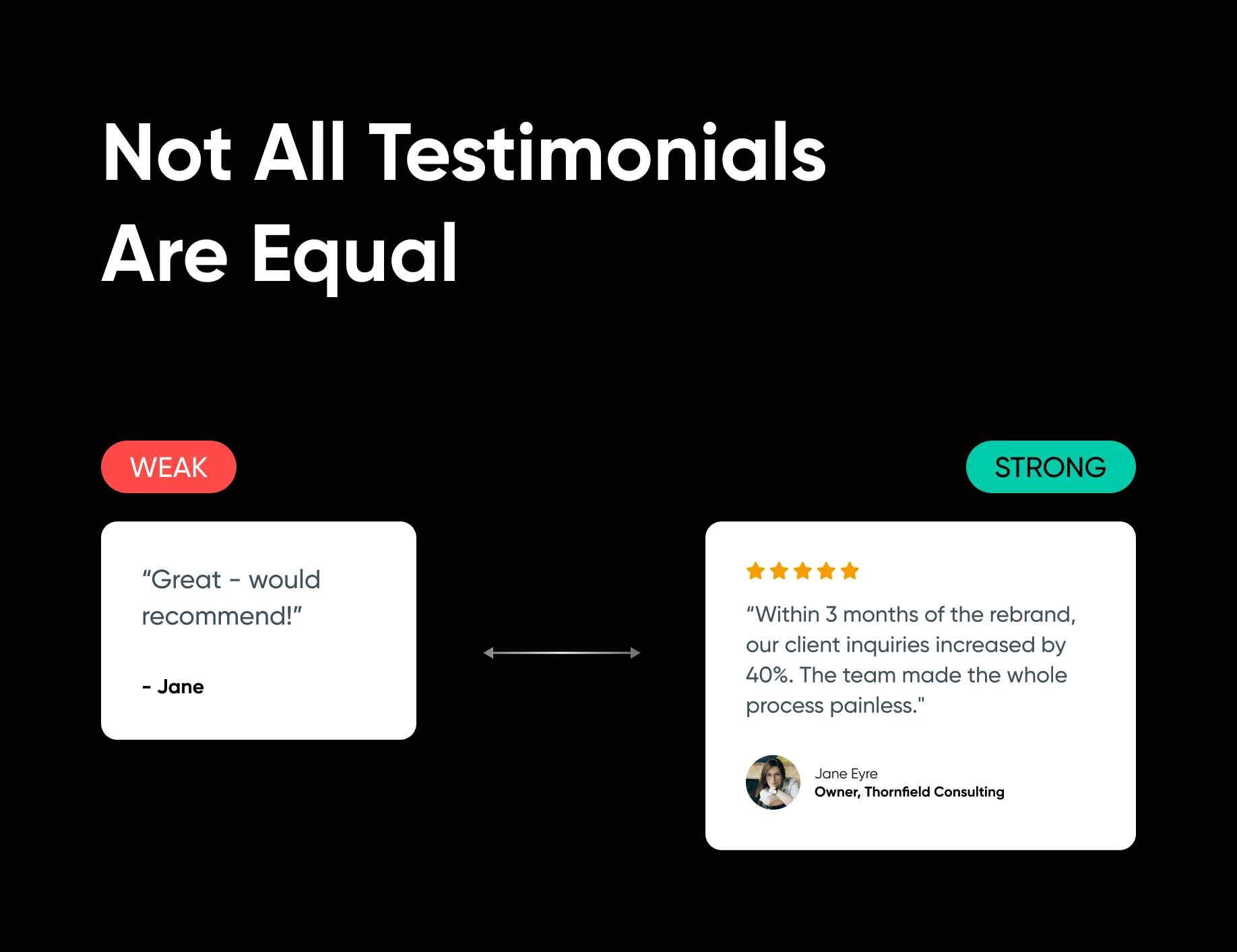
Good testimonials, reviews, and quotes speak to specific outcomes your customers achieved.
The best way to get juicy social proof for your site is to start with your happiest customers; those who have proactively said positive things in emails, social media comments, or to you because they’ve had standout experiences.
Look through your support inbox or CRM if you keep one to identify stories where customers express big feelings like relief, gratitude, or excitement about the results they’ve gotten from your offering.
Another tactic is to monitor social media mentions to catch positive feedback in the wild. All you have to do to use it is ask the customer for permission to feature it on your website.
How To Make the Ask
Timing is critical when you ask for a testimonial or review.
The best moments to request feedback are when the positive experience is still fresh in the customer’s mind.
- For product purchases, this might be a few days after they’ve received their order and had time to use it. For services, it’s often right after you’ve delivered the result, closed the loop on a project, or passed a milestone.
- Asking too early — before the customer has had a chance to truly evaluate the outcome — leads to generic feedback. But asking too late increases the chance they’ve forgotten the experience.
- When reaching out to customers in an effort to gather social proof, it’s important to be specific and make it super easy for them to reply.
For example, you might send an email saying, “We’re updating our website with more customer stories, and because you recently achieved [specific outcome], we’d love to include your experience. If you’re willing, simply reply with a few sentences about what results you got and what you liked most.”
Avoid heavy pressure and give the customer space to deliver an authentic quote.
How To Incentivize Social Proof (Without the Ick Factor)
Many businesses hesitate to ask for testimonials because they worry about sounding pushy or transactional. The trick is to incentivize in ways that reward participation without buying praise.
Offering a small discount on future services once someone submits a testimonial is a genuine thank you, not a bribe for positive words. Entering respondents into a minor giveaway for everyone who contributes feedback is another ethical incentive because the value is in participation, not in what they say.
Is Text Enough, or Should I Get Video?
Text testimonials are valuable, but video testimonials are often more persuasive because they convey emotion, tone, and authenticity in ways written words cannot.
Over 80% of consumers say they’ve been convinced to buy a product or service after watching a video.
Encourage customers to send you short, conversational videos. Those shot on a modern smartphone should be fine, and better yet, in natural lighting for a genuine feel.
How To Display Social Proof Effectively
The best placement for social proof depends on the type, as different elements influence decision-making in different ways.
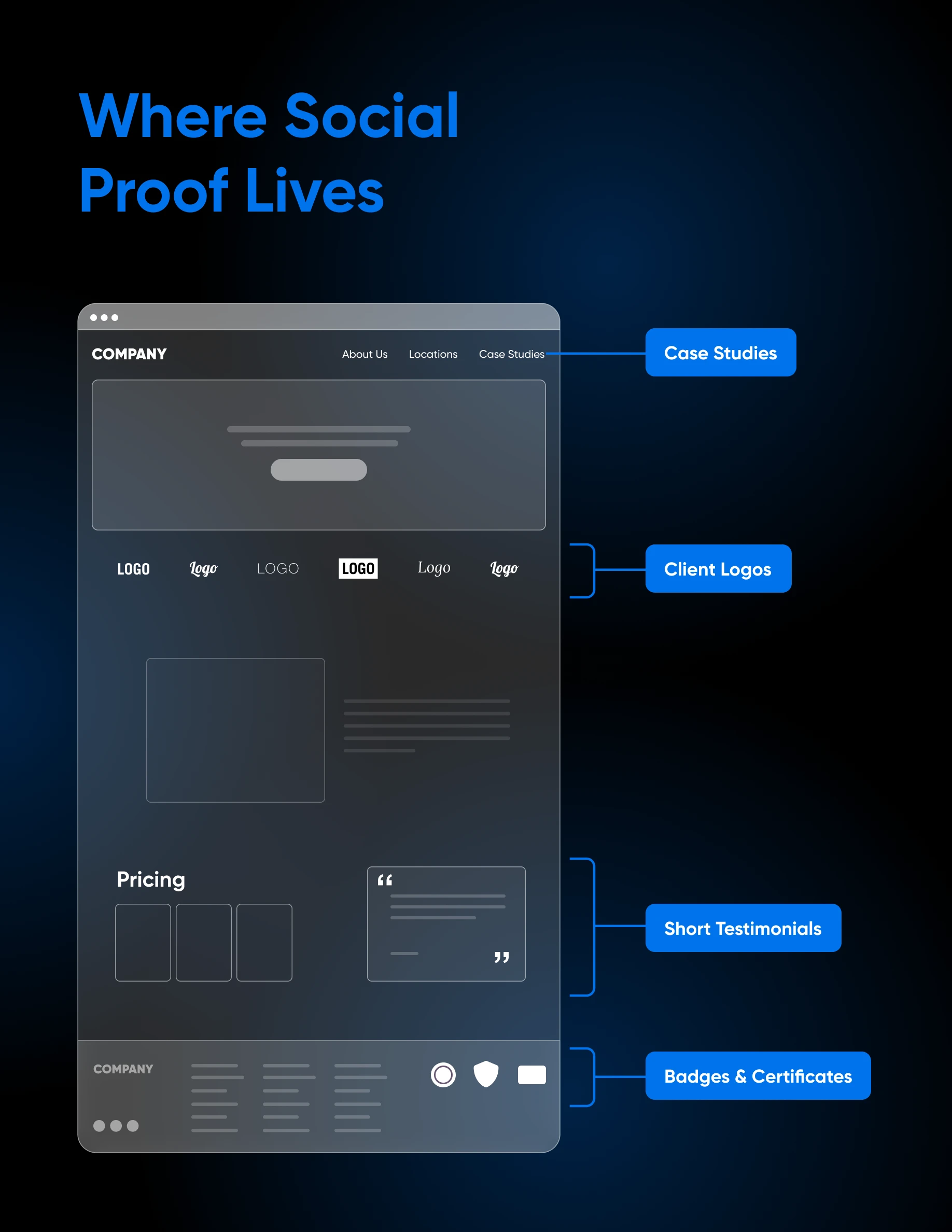
Here’s a quick breakdown of how we would pair social proof with your website elements:
- Logos from reputable clients work well near the top of your homepage or on service pages to establish credibility quickly.
- Short testimonials can live beside key conversion points like pricing tables or contact forms, where trust matters most at the moment of action.
- Longer case studies deserve their own page or section accessible from your main navigation, and they pair well with gated content or lead magnets for email capture.
- Awards, certifications, and press logos fit naturally in website footers or sidebars, where they quietly reinforce authority across every page.
- Social media mentions and influencer endorsements are effective on product pages or in blog posts that address common customer questions.
Formatting for Credibility
Social proof gains credibility when the viewer can tie it to a real person.
- Whenever possible, including the person’s photo, name, title, and company to make quotes and other forms of social proof real.
- When possible, reference quantifiable outcomes with your social proof (“We saw a 25 % increase in conversions within 90 days”) rather than vague praise (“This service is great”) because measurable results are more persuasive to visitors comparing options.
Static vs. Interactive
Modern design trends favor a mix of static and interactive elements.
A rotating carousel can showcase multiple testimonials without overwhelming the page visually, but keep in mind they should move slowly and allow pausing so users have time to read.
Static blocks work well when you don’t want to distract from the action you would like the site visitors to take. For example, use static reviews or influencer quotes on your pricing page to draw attention to the conversion point — but not away from it.
Implementing Case Studies
Case studies serve a higher level of social proof than shorter forms like testimonials and badges because they provide context and depth.
They answer the “how” and “why” behind results, which builds trust with buyers who want to understand your process and evaluate whether it suits their needs.
For complex services or high‑investment products, case studies reduce uncertainty. Publishing case studies also helps close sales, because you can point prospects to detailed examples that resonate with their specific challenges.
The Situation > Solution > Result Framework
The ideal case study starts by clearly painting the situation: what the customer’s world looked like before working with you. This section sets up the stakes and frames the problem in terms that other potential customers can relate to.
Then, in the solution section, describe what you did, specifically. We want to hear about the strategy, tools, and approach you took. Avoid vague platitudes. Explain steps in plain language so readers understand your methodology.
Finally, the result section ties the narrative to measurable outcomes like growth percentages, cost savings, time reduction. etc. Bonus points if you’re able to include direct customer quotes about how thrilled they were with your services.
This framework reads like a persuasive story and helps visitors see themselves in the customer’s shoes.
How To Quantify Impact With Case Studies
Time to double down; quantifying impact makes case studies undeniably more persuasive.
Instead of saying “The client saw improvement,” facts like “Customer acquisition cost dropped from $120 to $65 per lead” are so much more impactful.
When you can’t get exact numbers, use meaningful proxies such as time saved (“We cut onboarding time in half”) or satisfaction improvements (“Net Promoter Score improved from 58 to 74”).
The Visual Element of a Good Case Study
Visual documentation reinforces what you’ve already gone to lengths to describe verbally.
Before/after photos are especially powerful in service contexts.
So before you start, remember to take screenshots of the outdated software, fried hair, rusty car — whatever it is that you’re working on — at the beginning and through the process to literally visualize the transformation.
Short video walkthroughs of results can add a whole new, fresh layer of engagement to otherwise static case study pages.
Getting a Little Writing Help From AI
Plenty of people balk at the idea of writing out a detailed case study from scratch.
However, generative artificial intelligence tools can assist you in drafting great case studies by helping you transform raw interview transcripts, customer emails, or data points into polished narratives.
AI can also help you identify common themes across multiple testimonials, suggest headline options, and optimize language for clarity and persuasion.
Of course, always review and refine AI‑generated text to ensure it’s accurate and authentic. AI should only ever be a writing partner, not a replacement for human insight and oversight.
Ready to Make Social Proof Work for You?
Social proof is more than pretty quotes to decorate your website.
Actually, it’s one of the most powerful ways to build revenue-boosting trust in your brand.
By thoughtfully requesting testimonials, delicately incentivizing participation, and presenting social proof in ways that are credible and visually engaging, you turn your website from a billboard into a persuasive marketing tool.
When done right, social proof doesn’t just show that others trust you — it convinces new visitors to do the same.

[Download] 2026 Website Credibility Playbook
Is Your Website Driving Potential Customers Away?
First impressions happen in under 50 milliseconds. This 42-page playbook gives small business owners practical tactics to look as credible as the big players — no agency, no redesign budget required.
Get The Playbook
Did you enjoy this article?

